Project Risk Management Template: A Comprehensive Overview
The Project Risk Management Template is a structured tool designed to help project managers and teams systematically identify, assess, and manage risks throughout the life of a project. It provides a clear framework for documenting potential issues, evaluating their impact, and developing strategies to mitigate them. This template is particularly useful for ensuring that risks are not overlooked and are actively addressed to minimize disruptions to project timelines, budgets, and overall success.
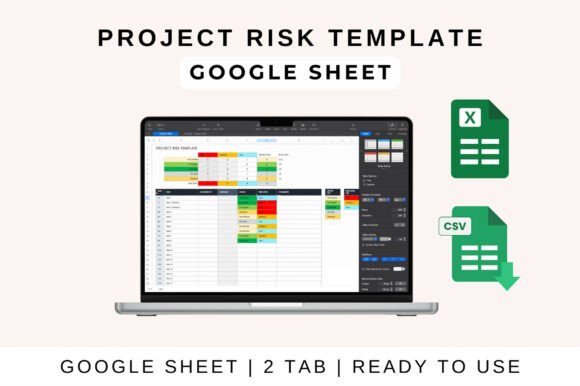
Whether you're managing a small-scale initiative or a complex, large-scale project, the Project Risk Management Template offers a consistent approach to risk assessment. It includes fields for risk description, probability, impact, owner, and mitigation strategies, making it easy to track and update as projects evolve. The template also auto-calculates risk scores and priority levels, offering a data-driven way to prioritize actions and allocate resources effectively.
Why Someone Might Be Interested in the Project Risk Management Template
Individuals and organizations interested in improving their project management practices may find the Project Risk Management Template appealing for several reasons. First, it helps reduce uncertainty by providing a structured method for identifying and addressing risks before they escalate into major problems. This proactive approach can save time, money, and effort in the long run.
Additionally, the template supports collaboration by assigning ownership of each risk to specific team members. This ensures accountability and clarity on who is responsible for monitoring and mitigating each identified risk. For teams working across different departments or locations, this feature can enhance communication and coordination.
The Project Risk Management Template also includes visual elements such as risk heat maps or charts, which provide an at-a-glance summary of the most critical risks. These visuals can be especially helpful during stakeholder meetings or when presenting project status updates to executives or clients.
Benefits, Tradeoffs, and Considerations
One of the main benefits of using the Project Risk Management Template is its versatility. It is suitable for projects of all sizes and across various industries, making it a valuable resource for project managers looking for a standardized approach. Its compatibility with popular spreadsheet applications like Google Sheets, Microsoft Excel, and Apple Numbers further enhances its accessibility and ease of use.
However, there are some tradeoffs to consider. While the template provides a solid foundation for risk management, it may not include advanced features found in specialized project management software. For example, it does not offer real-time collaboration tools, automated alerts, or integration with other project management systems. Users who require more sophisticated functionality may need to supplement the template with additional tools.
Another consideration is the level of customization required. While the template is designed to be user-friendly, it may need adjustments to fit the specific needs of a project or organization. This could involve adding custom fields, modifying risk categories, or adjusting the calculation formulas used to determine risk scores. Users should be prepared to invest time in tailoring the template to their unique requirements.
Situations Where the Template Is a Strong Fit
The Project Risk Management Template is particularly well-suited for projects with moderate complexity where a structured but flexible approach to risk management is needed. It is ideal for teams that prefer a simple, intuitive tool that can be easily adapted to their workflow without requiring extensive training or technical expertise.
This template is also beneficial for organizations that want to standardize their risk management processes across multiple projects. By using a consistent format, teams can ensure that all projects follow similar procedures, making it easier to compare risk profiles, share best practices, and maintain transparency with stakeholders.
In addition, the Project Risk Management Template is a good choice for individuals or small teams that do not have access to enterprise-level project management software. It provides a cost-effective alternative that still delivers valuable insights and support for risk mitigation efforts.
Situations Where Alternatives May Be Worth Considering
For larger organizations or projects with high levels of complexity, alternatives to the Project Risk Management Template may be more appropriate. Specialized risk management software often includes features such as automated risk assessments, scenario modeling, and integration with other project management tools. These advanced capabilities can be essential for managing risks in large-scale or highly regulated environments.
Teams that require real-time collaboration, version control, or cloud-based access may also benefit from using dedicated project management platforms. These tools often offer more robust features for tracking progress, assigning tasks, and communicating with stakeholders, which can complement or replace the functionality provided by the template.
Finally, users who are not comfortable with spreadsheets or prefer a more visual, interactive experience may find other tools more suitable. Some platforms offer drag-and-drop interfaces, customizable dashboards, and built-in reporting features that can simplify the risk management process.
Practical Decision-Making Insights
When deciding whether the Project Risk Management Template is the right choice, it’s important to evaluate your project's specific needs and constraints. Ask yourself questions such as: What level of risk management is required? Do we need advanced features beyond basic documentation and tracking? Are we looking for a low-cost, easy-to-use solution?
Consider the skills and preferences of your team as well. If your team is already familiar with spreadsheet applications, the template may be a natural fit. However, if your team prefers more integrated or automated solutions, exploring other options may be necessary.
Ultimately, the Project Risk Management Template is a practical and effective tool for managing risks in a wide range of projects. By understanding its strengths, limitations, and suitability for different scenarios, you can make an informed decision about whether it aligns with your goals and needs. Whether you choose to use this template or explore other alternatives, the key is to implement a risk management strategy that supports your project's success.